 Reviews



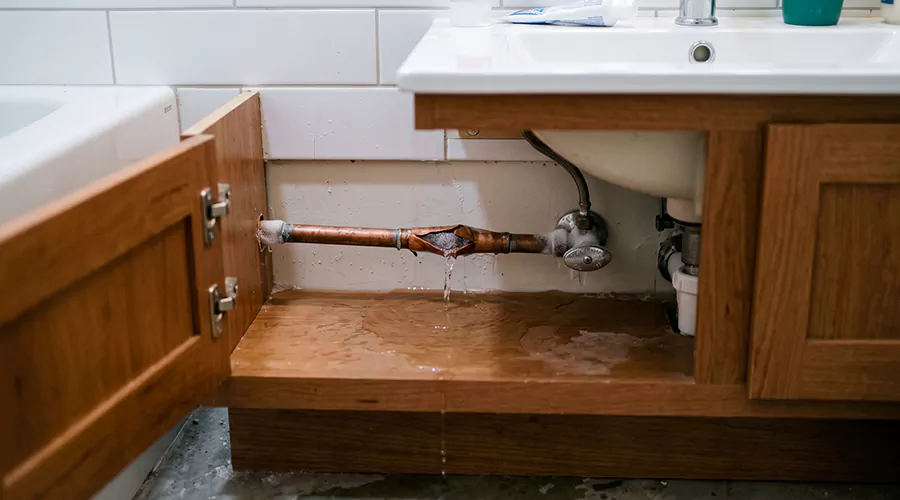
Frozen pipes burst because ice can block the pipe and create dangerously high pressure in the liquid water trapped beyond the blockage. The pipe often ruptures away from the ice itself. Damage may remain hidden until the ice melts and normal water pressure forces water through the opening.
This mechanism was established through research by the University of Illinois. Its investigation found that pressure building in trapped liquid water is the main cause of many freeze-related pipe ruptures. Understanding the process explains why a pipe may split in a section that never appeared frozen.
What Happens When Water Freezes Inside a Pipe?
Water expands when it turns into ice. However, the resulting damage is not usually caused by ice simply pressing outward against every part of the pipe wall. The more important condition develops when ice blocks the pipe completely. Continued freezing can then increase pressure in trapped liquid water.
The sequence typically involves five stages:
- Water begins freezing at a vulnerable location.
- Ice grows until it blocks the pipe.
- Liquid water becomes trapped between the ice and a closed fixture.
- Additional ice growth increases pressure in that trapped section.
- The pipe ruptures when the pressure exceeds its strength.
The pipe may rupture beyond the frozen area because pressure is transmitted through the trapped liquid water. The University of Illinois investigated this mechanism using laboratory and field research.
Why Does the Pipe Burst Away From the Ice?
A frozen blockage can separate the water inside a pipe into sections. The section connected to the incoming water supply may still allow some pressure movement toward the source. The section between the ice blockage and a closed faucet may have no effective route for pressure relief. As additional freezing occurs, pressure increases in the trapped liquid water.
The pipe then fails at a vulnerable point along that pressurized section. This explains why the visible split may not be located at the coldest part of the pipe. Research summarized by The Hanover Insurance Group confirms that frozen pipes commonly rupture in areas where little or no ice has formed.
Does Every Frozen Pipe Burst?
No. A frozen pipe does not automatically rupture. The risk depends on several conditions, including how ice forms and whether liquid water becomes trapped.
Relevant factors include:
- How long the pipe remains exposed to freezing conditions.
- Whether ice completely blocks the pipe.
- Whether trapped water can relieve pressure.
- The pipe's material and condition.
- Existing weaknesses in the plumbing.
- The position of nearby valves and fixtures.
A pipe can become completely blocked by ice without immediately rupturing. However, the absence of visible leakage does not prove that the pipe remains undamaged. Damage may become apparent during thawing.
At What Temperature Can Pipes Freeze?
Water normally freezes at approximately 32°F (0°C) under ordinary conditions. However, a pipe's freezing risk cannot be determined from outdoor temperature alone. The pipe's exposure and surrounding insulation affect how quickly its water loses heat. University of Illinois research found that uninsulated pipes in certain unheated attic conditions began freezing when outdoor temperatures reached approximately 20°F (-6.7°C) or below.
This was an observation under specific study conditions rather than a universal freezing threshold for every household pipe. A vulnerable pipe may freeze under different conditions depending on its installation.
Which Pipes Are Most Likely to Freeze?
Pipes are more vulnerable when they remain exposed to cold air or receive insufficient heat from the building.
Common locations include:
- Exterior walls.
- Unheated garages.
- Crawl spaces.
- Attics.
- Outdoor hose connections.
- Unheated utility rooms.
- Poorly insulated service areas.
A pipe installed close to an exterior opening can also be affected by cold drafts. Illinois Extension recommends identifying pipes in vulnerable locations before winter and providing suitable insulation. The pipe's location often matters more than the material alone.
Do Different Pipe Materials Freeze Differently?
Different plumbing materials respond differently to temperature changes and internal pressure. However, no ordinary household pipe should be assumed immune to freeze damage.
| Pipe Material | General Characteristic | Freeze-Related Concern |
|---|---|---|
| Copper | Rigid metal pipe | May rupture under high internal pressure |
| Galvanized steel | Rigid metal pipe | Existing deterioration may increase vulnerability |
| PEX | Flexible plastic pipe | Flexibility does not eliminate freeze damage |
| CPVC | Rigid plastic pipe | Damage can affect the pipe or its connections |
| PVC pressure pipe | Rigid plastic pipe | Freezing can damage unsuitable exposed installations |
The surrounding installation must also be considered. A flexible pipe can still develop leaks at its fittings. A damaged connection may become visible only after the system thaws.
Why Do Pipes Sometimes Leak Only After Thawing?
A frozen pipe can rupture while ice remains inside it. The ice blockage may temporarily prevent normal water flow through the damaged area. When the temperature rises, the ice begins melting. Water then reaches the rupture and escapes under normal supply pressure. This creates the impression that the pipe burst during thawing.
However, the actual damage may have occurred earlier. The Hanover Insurance Group explains that the pipe can fail because of pressure building beyond the ice blockage. The resulting water damage may become visible only when the ice melts. A thawed pipe should therefore be inspected before assuming it is safe.
What Are the Warning Signs of a Frozen Pipe?
A frozen pipe often affects water flow before visible damage appears. However, several other plumbing problems can produce similar symptoms.
Watch for these warning signs:
- A faucet produces very little water during freezing weather.
- Water flow stops at one fixture.
- Nearby fixtures continue operating normally.
- Exposed pipes develop visible frost.
- An exterior wall contains unprotected plumbing.
- A cold-water line stops flowing unexpectedly.
- A pipe has been exposed to prolonged freezing conditions.
- Water flow returns unevenly during thawing.
- Moisture appears near a previously frozen section.
- Water begins leaking after temperatures rise.
A pipe does not need to show visible frost to contain ice. Concealed sections may freeze without any exterior warning.
Why Can Opening a Faucet Reduce Burst Risk?
An open faucet can provide a route for trapped water to relieve pressure. This can reduce the pressure buildup associated with certain freeze-related failures. However, leaving a faucet dripping does not guarantee that the pipe will remain unfrozen.
Illinois Extension recommends allowing a vulnerable faucet to trickle during severe cold and opening cabinet doors so household heat can reach exposed plumbing. An open faucet is only one preventive measure. Maintaining heat and protecting exposed piping remain important.
What Should You Do if a Pipe Is Already Frozen?
A suspected frozen pipe should be handled carefully because it may already contain hidden damage. Begin by checking whether other fixtures still receive water. Locate the main shutoff valve before attempting any thawing.
For accessible piping, follow appropriate safety guidance:
- Identify the affected section when possible.
- Check for visible damage.
- Open the affected faucet when safe.
- Apply gentle heat using an appropriate method.
- Work gradually rather than using sudden intense heat.
- Monitor the pipe for developing moisture.
- Stop if damage becomes visible.
- Keep the main shutoff accessible.
Never use a blowtorch or open flame to thaw household pipes. Illinois Extension specifically warns against open flames and recommends preparing to shut off the water if the pipe ruptures. Concealed or inaccessible frozen piping deserves additional caution.
Can a Frozen Pipe Cause Water Damage Without Bursting?
Yes. Freezing can damage a pipe connection or fitting without creating a large visible split. A small opening may produce slow leakage after thawing. Water can then enter nearby building materials.
Possible consequences include:
- Damp insulation.
- Wall staining.
- Moisture beneath flooring.
- Cabinet damage.
- Persistent dripping around fittings.
- Hidden leaks that become noticeable later.
A pipe that regains normal flow should still be checked for moisture when freezing exposure was severe.
How Much Does Frozen Burst Pipe Repair Cost?
The repair cost depends on how much piping has been damaged and how easily the section can be accessed. An exposed pipe may require limited replacement work. A burst inside a finished wall can involve additional restoration.
| Repair Category | 2026 U.S. Cost |
|---|---|
| Typical burst pipe repair | 200–3,000 |
| Average burst pipe repair | Approximately $500 |
| Repair per linear foot | 150–250 |
| Emergency service call | 100–300 |
| Extensive damage | Can exceed $5,000 |
These figures reflect Angi's August 2026 pricing report. Actual expenses may include restoring water-damaged walls or flooring.
When Should You Call a Professional?
Professional assistance becomes appropriate when frozen piping cannot be reached safely or damage is already visible.
Seek help when:
- A pipe has split.
- Water leaks during thawing.
- The frozen section is concealed.
- Several pipes may be affected.
- A valve or fitting appears damaged.
- Normal water flow does not return.
- Electrical equipment is exposed to water.
Do not restore full water pressure to a system with suspected unresolved damage.
How Can You Prevent Frozen Pipes From Bursting?
Freeze prevention focuses on keeping pipes warm and reducing conditions that allow ice blockages to develop.
Useful measures include:
- Insulate vulnerable pipes.
- Seal cold drafts near exposed plumbing.
- Maintain indoor heating during cold weather.
- Open cabinets beneath sinks on exterior walls when appropriate.
- Disconnect garden hoses before freezing conditions.
- Winterize unused buildings according to their plumbing requirements.
- Know how to shut off the main water supply.
Illinois Extension recommends maintaining indoor heat at no lower than 55°F during cold weather when using its winter pipe-protection approach. Insulation slows heat loss but does not create heat. Pipes exposed to prolonged freezing conditions may require additional protection.
Conclusion
Frozen pipes burst when ice blocks the pipe and pressure increases inside trapped liquid water. The rupture often develops away from the frozen section itself. A damaged pipe may not begin leaking until the ice melts. Protect vulnerable plumbing with suitable insulation and maintain heating during severe cold. Never use open flames to thaw pipes. If freezing has already occurred, monitor for damage and keep the main shutoff accessible.
Frequently Asked Questions
Do frozen pipes burst because ice pushes against the pipe wall?
The main mechanism in many cases is pressure building in liquid water trapped beyond an ice blockage.
Can a pipe burst in a section that never froze?
Yes. Pressure can cause failure away from the ice blockage.
Does a frozen pipe always leak immediately?
No. Ice may temporarily prevent water from escaping through a damaged section.
Can PEX pipes burst when frozen?
Yes. Their flexibility may affect how they respond, but they are not immune to freeze damage.
Will pipe insulation prevent every freeze?
No. Insulation slows heat loss but may not prevent freezing during prolonged exposure without sufficient warmth.